Rocket Systems Featured on Forbes: AI in the Travel Industry

Artificial intelligence is creating a major shift in how travelers discover, evaluate and purchase travel services. Companies that successfully combine AI wi...

Rocket Systems Featured on Forbes: AI in the Travel Industry

Rocket Systems is proud to have shared its technology expertise on Forbes through an article written by our founder and CEO, Garik Khachanyan, for the Forbes Technology Council.

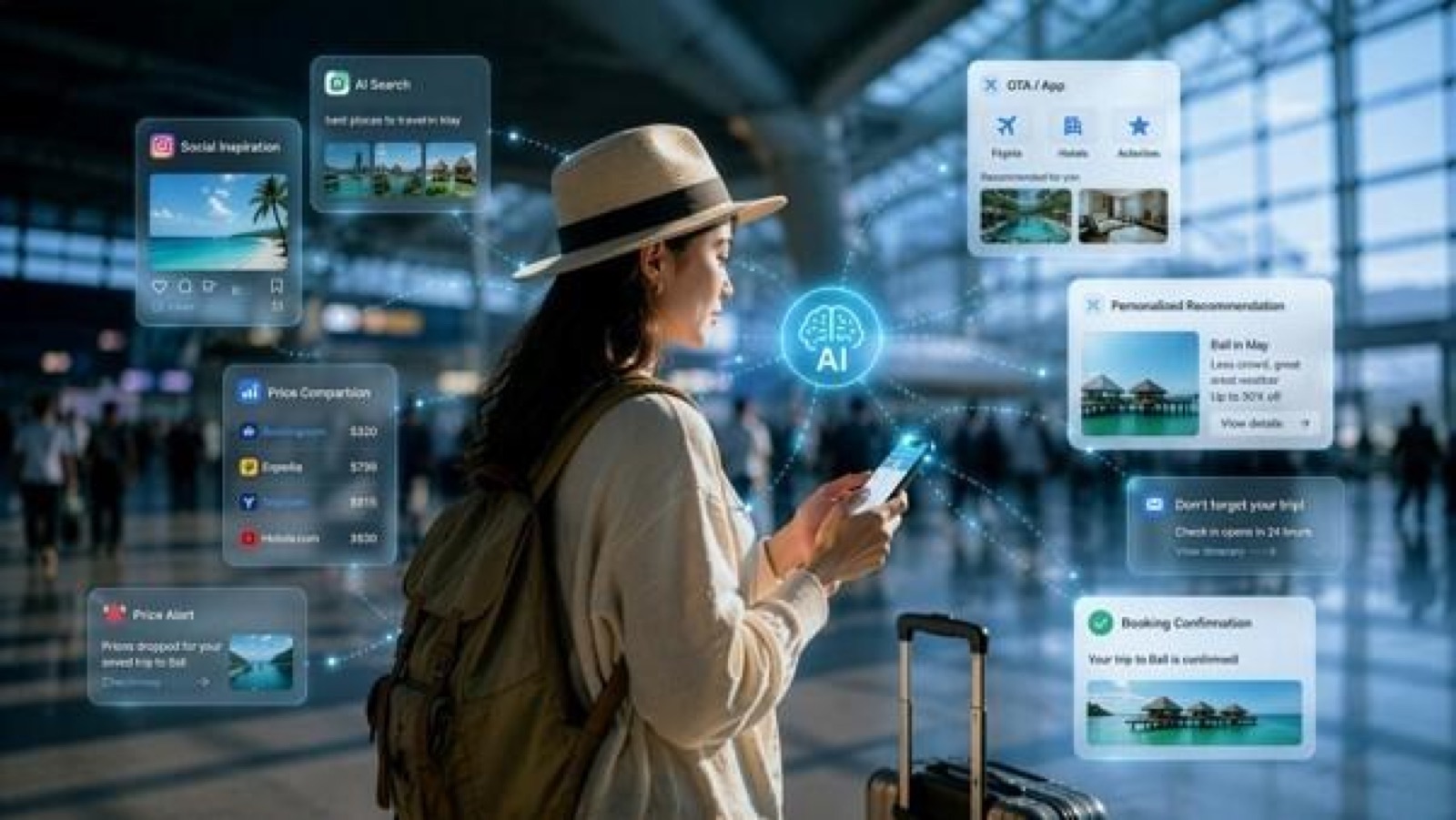
Published under the title “How AI Will Impact the Travel Industry,” the article explores how artificial intelligence is reshaping travel—from personalized recommendations and automated customer service to dynamic pricing and complete AI-generated travel experiences.

The publication reflects Rocket Systems’ growing experience in developing AI-powered software and applying emerging technologies to practical challenges within the travel industry.

The New Era of AI-Powered Travel

Travel technology has developed rapidly over the last decade. Travelers can now search for flights, compare hotels, reserve activities and manage complete itineraries online.

However, most traditional travel platforms still provide largely identical experiences to every user. Two travelers searching for the same destination may see the same flights, hotels and packages, even though their interests, budgets and travel habits are completely different.

Artificial intelligence is changing this model.

Instead of simply displaying available options, AI-powered travel platforms can analyze customer preferences and help users identify the options that are genuinely relevant to them.

This creates an opportunity to make travel planning:

  • More personalized
  • More efficient
  • Less stressful
  • More accessible
  • Better aligned with the traveler’s budget and interests

As highlighted in the Forbes article, AI could eventually move travel platforms beyond basic search and toward intelligent systems capable of curating complete travel experiences.

Personalized Travel Recommendations

Personalization is one of the most promising applications of artificial intelligence in travel.

Traditional booking platforms normally generate results based on a small number of parameters, such as destination, dates, number of travelers and price.

An AI-powered system can consider a much wider set of information, including:

  • Previous travel history
  • Preferred destinations
  • Typical accommodation choices
  • Browsing behavior
  • Budget patterns
  • Interest in beaches, culture, food or adventure
  • Preferred travel periods
  • Family or solo travel preferences

For example, someone searching for a trip to Dubai might be interested in luxury resorts and shopping, while another traveler may prefer cultural attractions, local cuisine and affordable accommodation.

AI can help a travel platform understand these differences and deliver recommendations that feel relevant to each traveler instead of presenting the same generic packages to everyone.

Smarter Customer Service Through Automation

Travel businesses receive large numbers of repetitive questions every day.

Customers want to know about baggage rules, hotel facilities, visa requirements, airport transfers, cancellation conditions, payment methods and destination activities.

AI-powered chatbots and virtual assistants can answer many of these questions immediately, providing customers with support outside normal business hours.

This does not mean completely replacing human travel specialists. Instead, automation can manage routine requests while employees focus on situations that require expertise, negotiation or personal attention.

For travel companies, this can result in:

  • Faster response times
  • Lower operational costs
  • Improved customer availability
  • More consistent communication
  • Greater employee productivity

The best results are achieved when AI and human expertise work together. Artificial intelligence handles speed and scale, while travel professionals provide judgment, empathy and specialized knowledge.

Dynamic Packages Based on Real-Time Information

Artificial intelligence can also help travel businesses create more relevant packages by analyzing multiple sources of information simultaneously.

These may include:

  • Current flight prices
  • Hotel availability
  • Seasonal demand
  • Local events
  • Weather conditions
  • Customer budgets
  • Historical booking patterns
  • Destination popularity

Instead of offering only predefined packages, an intelligent travel platform could dynamically combine flights, accommodation and experiences according to the traveler’s individual requirements.

A budget-conscious traveler interested in culture might receive a package featuring an off-season flight, an affordable hotel close to public transportation and activities near historical landmarks.

Another traveler might receive a premium package centered around beachfront accommodation, private transfers and luxury experiences.

This approach transforms AI from a simple recommendation tool into a technology capable of helping create an entire personalized journey.

The Challenges of Implementing AI in Travel

Although the potential is significant, integrating artificial intelligence into an existing travel product is not as simple as connecting a chatbot or adding a recommendation engine.

Successful implementation requires a clear technical strategy.

Data Quality and Integration

Travel companies often store information across reservation systems, customer relationship management platforms, supplier databases, payment services and marketing tools.

AI systems require reliable and well-structured data. When information is fragmented, outdated or inconsistent, the quality of the AI-generated results will also be limited.

Companies must therefore establish proper processes for collecting, cleaning, validating and centralizing their information.

Technical Expertise

Building useful AI functionality requires expertise in software architecture, machine learning, data management, cloud infrastructure and user experience design.

The objective should not be to introduce AI simply because it is popular. Every AI feature should solve a specific business or customer problem.

Scalability

An AI solution that works for a small number of users may face difficulties as the platform grows.

Travel businesses must plan for increases in customer activity, supplier information, search requests and data volumes. Cloud infrastructure and modular software architecture can help systems expand without requiring complete redevelopment.

Privacy and Transparency

Travel platforms may process sensitive information about customer preferences, locations and purchasing behavior.

Companies must be transparent about what information they collect, why it is collected and how it is used. Privacy, security, bias prevention and responsible data processing must be considered from the beginning of the project—not after launch.

Rocket Systems’ Approach to AI Development

At Rocket Systems, we focus on building AI functionality that delivers measurable value rather than adding technology without a clear purpose.

Our approach begins with understanding the underlying business problem. We then evaluate the available data, existing software architecture, user journey and operational processes before recommending an implementation strategy.

Depending on the project, this may involve:

  • AI-powered recommendation systems
  • Intelligent travel assistants
  • Customer-support automation
  • Dynamic package generation
  • Data analysis and forecasting
  • Integration with booking and reservation systems
  • Custom CRM and workflow automation
  • Scalable cloud-based platforms

We also recognize that AI is rarely a standalone feature. It must be properly integrated into the company’s broader software ecosystem, including its databases, customer interfaces, internal workflows and third-party services.

From Industry Insight to Practical Innovation

Rocket Systems’ Forbes publication represents more than a discussion about future technology. It reflects our belief that artificial intelligence should be used to solve real-world problems for both travelers and travel businesses.

The next generation of travel platforms will not simply show customers thousands of available options. They will help travelers understand those options, filter irrelevant information and build experiences adapted to their individual needs.

For travel companies, AI can improve productivity, reduce repetitive work, strengthen customer relationships and create entirely new digital business models.

However, achieving these results requires more than adopting the latest AI tools. It requires strong software engineering, reliable data, scalable architecture and a clear understanding of the people who will use the product.

Building the Future of Travel Technology

Artificial intelligence is creating a major shift in how travelers discover, evaluate and purchase travel services.

Companies that successfully combine AI with human expertise will be able to provide faster, smarter and more personalized experiences. Those that treat AI as only a temporary trend may struggle to create meaningful value from it.

Rocket Systems is proud to contribute to this conversation through the Forbes Technology Council and to continue developing innovative software solutions for the travel industry and other technology-driven sectors.

Businesses exploring AI-powered travel platforms, recommendation systems, intelligent assistants or custom software can work with Rocket Systems to transform an initial concept into a scalable digital product.

Ready to start your project?

Let's discuss your requirements and build something amazing together.

Rocket Systems Featured on Forbes: AI in the Travel Industry

Artificial intelligence is creating a major shift in how travelers discover, evaluate and purchase travel services. Companies that successfully combine AI wi...

Rocket Systems Featured on Forbes: AI in the Travel Industry
Rocket Systems Aug 3, 2026

Rocket Systems is proud to have shared its technology expertise on Forbes through an article written by our founder and CEO, Garik Khachanyan, for the Forbes Technology Council.

Published under the title “How AI Will Impact the Travel Industry,” the article explores how artificial intelligence is reshaping travel—from personalized recommendations and automated customer service to dynamic pricing and complete AI-generated travel experiences.

The publication reflects Rocket Systems’ growing experience in developing AI-powered software and applying emerging technologies to practical challenges within the travel industry.

The New Era of AI-Powered Travel

Travel technology has developed rapidly over the last decade. Travelers can now search for flights, compare hotels, reserve activities and manage complete itineraries online.

However, most traditional travel platforms still provide largely identical experiences to every user. Two travelers searching for the same destination may see the same flights, hotels and packages, even though their interests, budgets and travel habits are completely different.

Artificial intelligence is changing this model.

Instead of simply displaying available options, AI-powered travel platforms can analyze customer preferences and help users identify the options that are genuinely relevant to them.

This creates an opportunity to make travel planning:

  • More personalized
  • More efficient
  • Less stressful
  • More accessible
  • Better aligned with the traveler’s budget and interests

As highlighted in the Forbes article, AI could eventually move travel platforms beyond basic search and toward intelligent systems capable of curating complete travel experiences.

Personalized Travel Recommendations

Personalization is one of the most promising applications of artificial intelligence in travel.

Traditional booking platforms normally generate results based on a small number of parameters, such as destination, dates, number of travelers and price.

An AI-powered system can consider a much wider set of information, including:

  • Previous travel history
  • Preferred destinations
  • Typical accommodation choices
  • Browsing behavior
  • Budget patterns
  • Interest in beaches, culture, food or adventure
  • Preferred travel periods
  • Family or solo travel preferences

For example, someone searching for a trip to Dubai might be interested in luxury resorts and shopping, while another traveler may prefer cultural attractions, local cuisine and affordable accommodation.

AI can help a travel platform understand these differences and deliver recommendations that feel relevant to each traveler instead of presenting the same generic packages to everyone.

Smarter Customer Service Through Automation

Travel businesses receive large numbers of repetitive questions every day.

Customers want to know about baggage rules, hotel facilities, visa requirements, airport transfers, cancellation conditions, payment methods and destination activities.

AI-powered chatbots and virtual assistants can answer many of these questions immediately, providing customers with support outside normal business hours.

This does not mean completely replacing human travel specialists. Instead, automation can manage routine requests while employees focus on situations that require expertise, negotiation or personal attention.

For travel companies, this can result in:

  • Faster response times
  • Lower operational costs
  • Improved customer availability
  • More consistent communication
  • Greater employee productivity

The best results are achieved when AI and human expertise work together. Artificial intelligence handles speed and scale, while travel professionals provide judgment, empathy and specialized knowledge.

Dynamic Packages Based on Real-Time Information

Artificial intelligence can also help travel businesses create more relevant packages by analyzing multiple sources of information simultaneously.

These may include:

  • Current flight prices
  • Hotel availability
  • Seasonal demand
  • Local events
  • Weather conditions
  • Customer budgets
  • Historical booking patterns
  • Destination popularity

Instead of offering only predefined packages, an intelligent travel platform could dynamically combine flights, accommodation and experiences according to the traveler’s individual requirements.

A budget-conscious traveler interested in culture might receive a package featuring an off-season flight, an affordable hotel close to public transportation and activities near historical landmarks.

Another traveler might receive a premium package centered around beachfront accommodation, private transfers and luxury experiences.

This approach transforms AI from a simple recommendation tool into a technology capable of helping create an entire personalized journey.

The Challenges of Implementing AI in Travel

Although the potential is significant, integrating artificial intelligence into an existing travel product is not as simple as connecting a chatbot or adding a recommendation engine.

Successful implementation requires a clear technical strategy.

Data Quality and Integration

Travel companies often store information across reservation systems, customer relationship management platforms, supplier databases, payment services and marketing tools.

AI systems require reliable and well-structured data. When information is fragmented, outdated or inconsistent, the quality of the AI-generated results will also be limited.

Companies must therefore establish proper processes for collecting, cleaning, validating and centralizing their information.

Technical Expertise

Building useful AI functionality requires expertise in software architecture, machine learning, data management, cloud infrastructure and user experience design.

The objective should not be to introduce AI simply because it is popular. Every AI feature should solve a specific business or customer problem.

Scalability

An AI solution that works for a small number of users may face difficulties as the platform grows.

Travel businesses must plan for increases in customer activity, supplier information, search requests and data volumes. Cloud infrastructure and modular software architecture can help systems expand without requiring complete redevelopment.

Privacy and Transparency

Travel platforms may process sensitive information about customer preferences, locations and purchasing behavior.

Companies must be transparent about what information they collect, why it is collected and how it is used. Privacy, security, bias prevention and responsible data processing must be considered from the beginning of the project—not after launch.

Rocket Systems’ Approach to AI Development

At Rocket Systems, we focus on building AI functionality that delivers measurable value rather than adding technology without a clear purpose.

Our approach begins with understanding the underlying business problem. We then evaluate the available data, existing software architecture, user journey and operational processes before recommending an implementation strategy.

Depending on the project, this may involve:

  • AI-powered recommendation systems
  • Intelligent travel assistants
  • Customer-support automation
  • Dynamic package generation
  • Data analysis and forecasting
  • Integration with booking and reservation systems
  • Custom CRM and workflow automation
  • Scalable cloud-based platforms

We also recognize that AI is rarely a standalone feature. It must be properly integrated into the company’s broader software ecosystem, including its databases, customer interfaces, internal workflows and third-party services.

From Industry Insight to Practical Innovation

Rocket Systems’ Forbes publication represents more than a discussion about future technology. It reflects our belief that artificial intelligence should be used to solve real-world problems for both travelers and travel businesses.

The next generation of travel platforms will not simply show customers thousands of available options. They will help travelers understand those options, filter irrelevant information and build experiences adapted to their individual needs.

For travel companies, AI can improve productivity, reduce repetitive work, strengthen customer relationships and create entirely new digital business models.

However, achieving these results requires more than adopting the latest AI tools. It requires strong software engineering, reliable data, scalable architecture and a clear understanding of the people who will use the product.

Building the Future of Travel Technology

Artificial intelligence is creating a major shift in how travelers discover, evaluate and purchase travel services.

Companies that successfully combine AI with human expertise will be able to provide faster, smarter and more personalized experiences. Those that treat AI as only a temporary trend may struggle to create meaningful value from it.

Rocket Systems is proud to contribute to this conversation through the Forbes Technology Council and to continue developing innovative software solutions for the travel industry and other technology-driven sectors.

Businesses exploring AI-powered travel platforms, recommendation systems, intelligent assistants or custom software can work with Rocket Systems to transform an initial concept into a scalable digital product.

Ready to get started?

Let's discuss your project and build something amazing together.